Skip to content
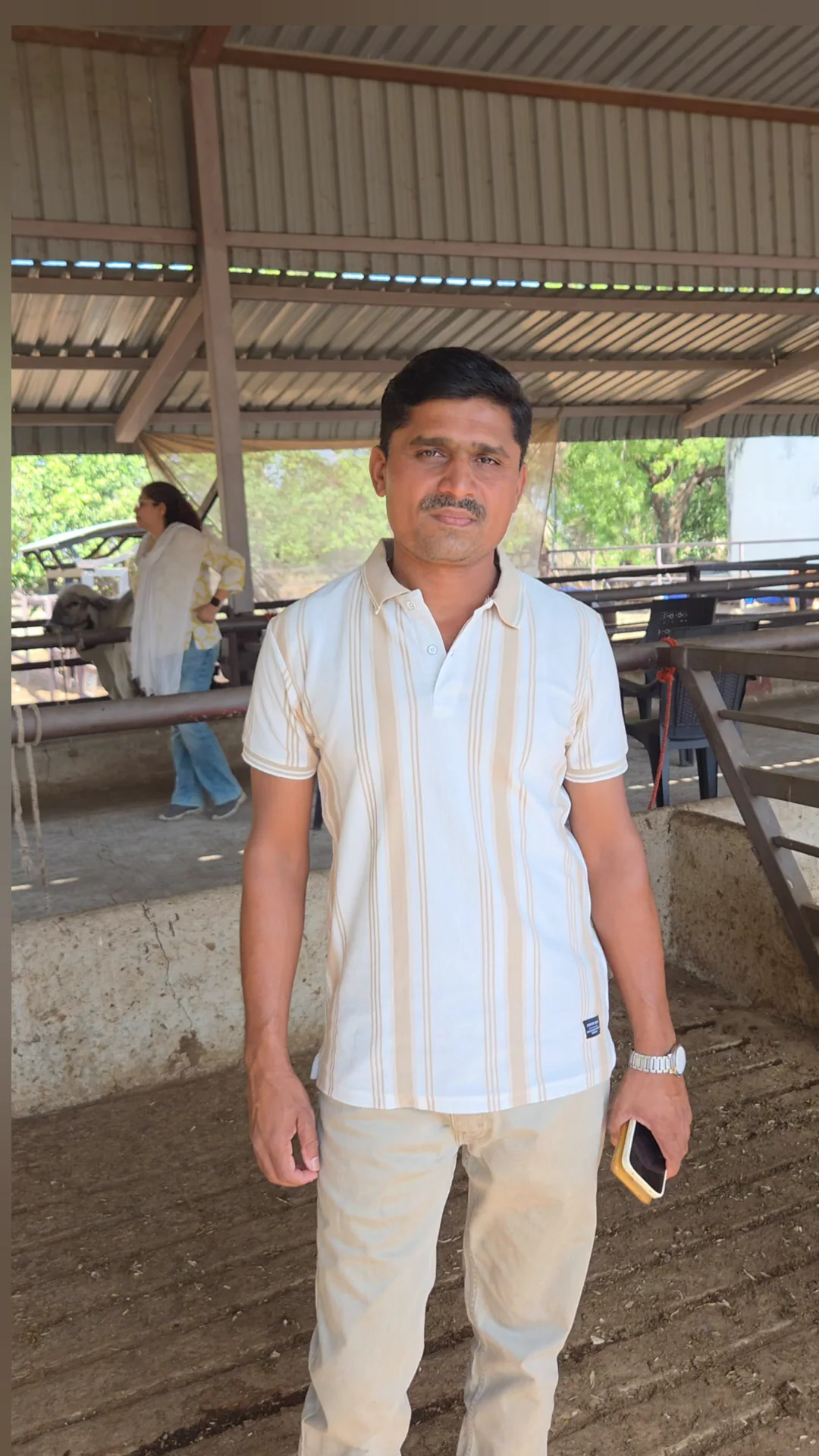
Maruti Namdev Palode at the cattle shed

A still from the farm video

About the Founder

Our Founder

Maruti Namdev Palode (मारुती नामदेव पालोदे)

A thoughtful Gir cattle breeder, building better milk-producing generations.

Rajur, Jalna district, Maharashtra, India

Gir cattleBreeding programmeFarm-gate dairy

2014

Gir farming journey began

9 + 1

Cows and one bull at the start

100+

Gir cattle reported at interview across two farms

≈57

Brazilian-lineage cattle reported at interview

≈55 L

At one milking session, historically reported

01 · The beginning

How it started

I am Maruti Namdev Palode. I began working with cattle in 2014, starting with nine cows and one bull. Before that, I had taken on a contract that left money tied up. I turned to caring for cows as a way to manage the stress of that period. What began as a personal reset became a long-term commitment to indigenous cattle.

02 · Why Gir

Choosing the Gir cow

I researched indigenous cattle before choosing Gir. I was drawn to the breed's calm, good-natured temperament and milk-producing potential. I also wondered why Gir cattle had travelled from India to countries including Brazil, the United States and Denmark, and what selective breeding might achieve. In the interview I cited reports of an 88-litre competition record and typical Brazilian production figures of 35–45 litres as inspiration. Those figures are interview statements, not independently verified results or claims about this farm.

03 · Approach

How animals are selected

My aim is to improve milk-producing potential while keeping the qualities of Gir cattle. I described choosing a bull to complement the cow, with attention to udder form, teat placement, body structure, head and back alignment, breed characteristics and pedigree. The farm uses selected bulls, separate bull enclosures, natural breeding and imported Brazilian semen. I described approximately three years of artificial-insemination experience during the period discussed. I also cited a 12–14 month calving interval and a 60–90 day post-calving pregnancy target as interview-era management references, not guarantees.

04 · Breeds

Experience across breeds

The first Maharashtra Government livestock award I described was in 2019; it encouraged me to work further on the breed. I reported championship recognition for two female siblings of Nandu at Maharashtra Government livestock exhibitions in 2019 and 2023. I also described a 2026 winner at Parli as a Brazilian-lineage female related to Marcelo, reportedly his sister. Her name is transcribed approximately as “Mani” and is not confirmed. Exact award titles, certificates, female identities and relationships remain to be verified.

05 · Brazil

The Brazilian acquisition

Gir is an Indian-origin breed. I described Brazilian Gir bloodlines as a result of cattle taken from India and generations of selective breeding. The farm incorporated selected Brazilian-influenced lines and imported semen into its programme. The approximately 57 Brazilian-lineage cattle I mentioned is an interview-era figure only. A separate interview remark about roughly 70% Silvania-related blood was unclear, so no percentage or relationship is published from it.

06 · Vision

What comes next

I believe the work should focus on milk production and improving the breed through breeding. Dairy products can be part of the business, but I do not promise that cattle farming automatically makes anyone wealthy. My view is that if indigenous cows can produce at least five litres, farmers can manage and maintain them; this is my perspective, not a guaranteed yield. The goal is to help farmers build sustainable herds by selecting thoughtfully and recording each generation.

07 · Philosophy

How the animals are kept

The featured farm facility was described as about one acre, with a main shed about 18 feet high and sides about 13 feet high. It has an open movement area, a rear drain, individual bull pens and a separate calving area. The farm also reports calf-rearing areas by age, camera monitoring in the delivery area, own fodder production, mineral and vitamin nutrition, clean-water arrangements, tractor-accessible feeding paths, and manual milk and pedigree records. These details describe the facility and practices discussed in the interview; staffing and operation may change.

Milestones

From a personal reset to a milk-focused Gir breeding programme

Award details below are interview-reported. Exact titles, certificates and the winning animals’ names are still being confirmed.

  1. 2014

    The Gir cattle journey begins

    Maruti reports starting with nine cows and one bull.

  2. 2019

    First reported Maharashtra Government livestock award

    Farm-reported recognition; exact award title and certificate pending confirmation.

    Reported · confirmation pending

  3. 2023

    Further reported championship recognition

    A Nandu-line female sibling was reported as champion; title, identity and certificate pending confirmation.

    Reported · confirmation pending

  4. 2026

    Further reported championship recognition

    A female described as related to Marcelo was reported as champion at Parli; name and relationship pending confirmation.

    Reported · confirmation pending

Achievements

The record, in the family's own words

Every item below is published only when the owner has both verified it and obtained permission to use any names or photographs involved. Nothing here implies an endorsement by a third party.

Ask for documents

Nothing published here yet

Milestones are added from the dashboard once the supporting record is on file and permission to publish has been given. We would rather leave this space empty than fill it with something we cannot stand behind.

Come and see the herd.

Farm visits are by appointment only, so that we can keep the animals calm and give you our full attention.